LLMs Unplugged Library
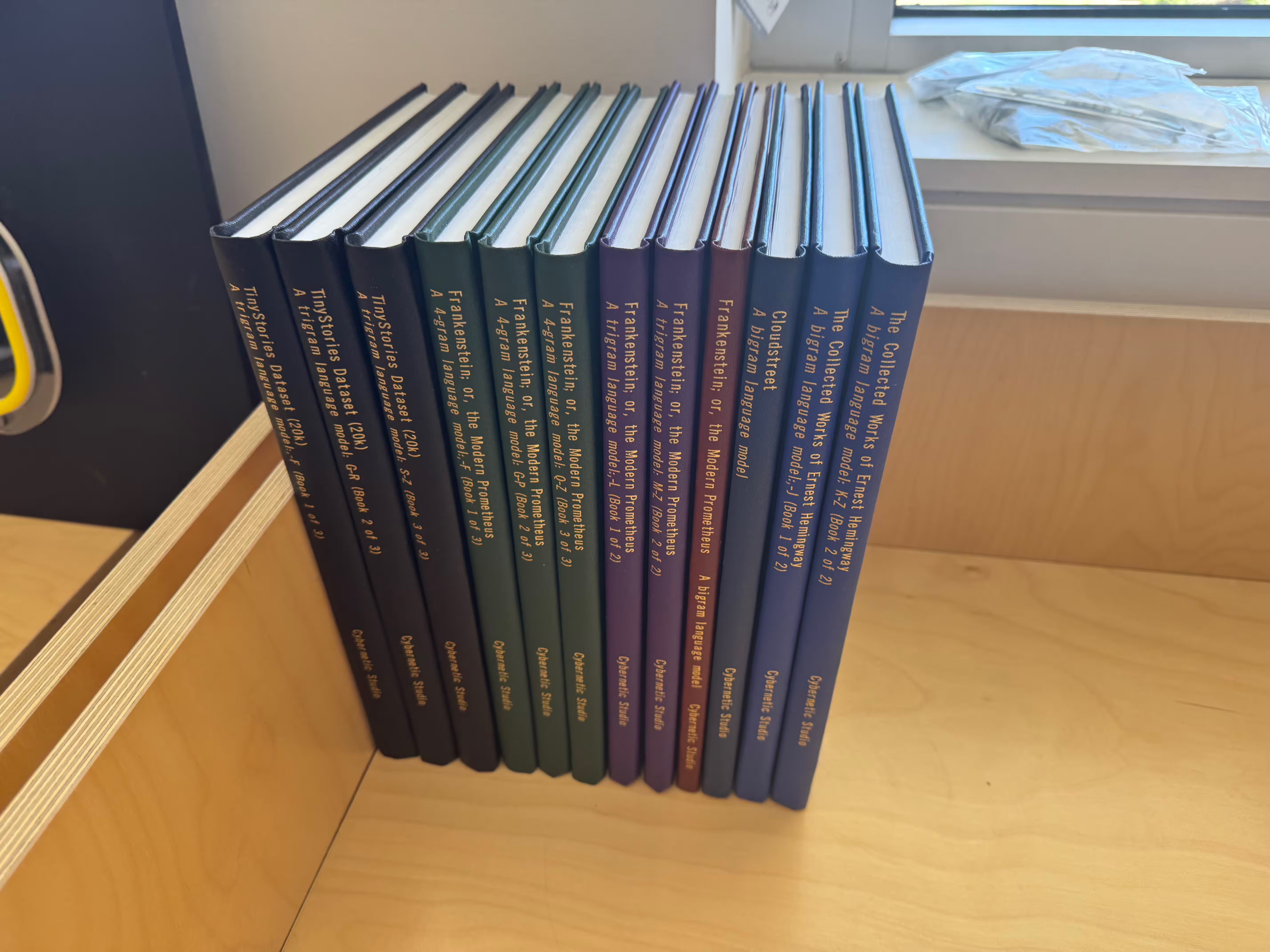
The LLMs Unplugged Library is a collection of pre-trained Language model A system that predicts what text comes next, using patterns learned from training data. Your hand-built grid, a cutouts spread, a booklet, and a room holding search sheets are all language models. View in glossary in printed, hardbound book form. Each volume contains N-gram model The general name for a model that predicts the next word from the previous n-1 words. Bigrams are 2-grams, trigrams are 3-grams, and so on. Every hand-built model on this site is an n-gram model. View in glossary frequency tables typeset from a classic work of literature—the same statistical patterns that underpin modern LLMs, but at human scale. You can hold the entire model in your hands and use it to generate new text with pen, paper, and dice.
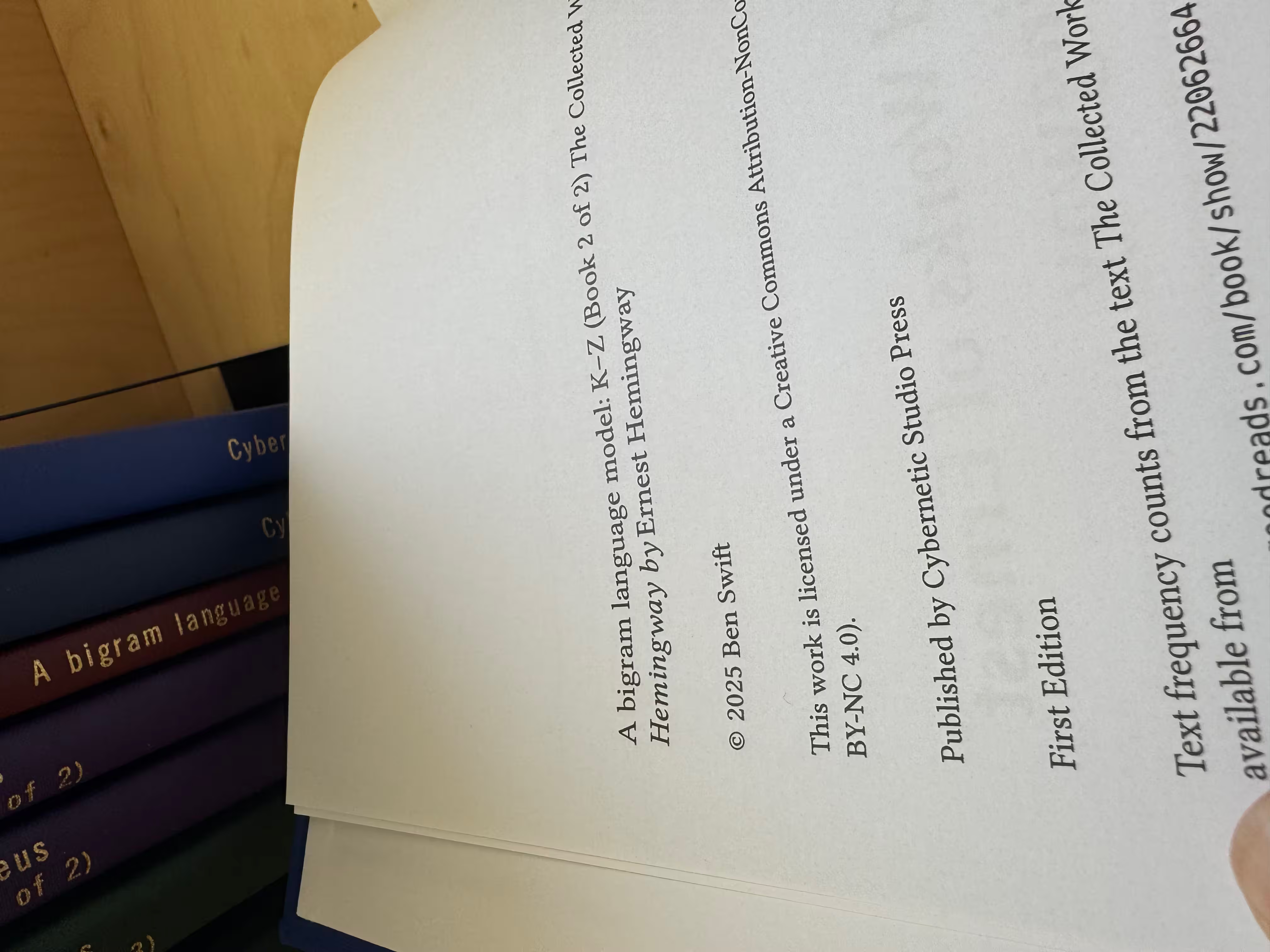
A conceptual art piece
The Library reframes a language model as a physical object—something bound, shelved, and read rather than queried through a chat window. The technology underneath is identical to the activities elsewhere on this site: a tokeniser counts how often each word follows each context, and those counts are typeset into lookup tables that anyone with a pair of dice can sample from. What changes is the framing. A workshop booklet is a consumable, printed for an afternoon and recycled afterwards. A Library volume is meant to sit on a shelf, be picked up, and reward closer attention.
The distinctive feature is the curation. Each volume is built from a specific literary work (or the collected works of an author), then typeset in Bigram model A model that predicts the next word from one previous word. It's what you build in the fundamental modules: each row of your grid says what can follow a single word. View in glossary , Trigram model A model that predicts the next word from the two previous words. It predicts better than a bigram but has far more contexts to store, which is why a trigram booklet is so much thicker than the bigram booklet for the same text. View in glossary , and 4-gram variants. The progression across volumes makes the fundamental trade-off between model size and output quality legible without a single chart: a trigram model of Frankenstein produces noticeably more coherent text than the bigram version, but the book is considerably thicker. Pick up a Hemingway bigram and you get terse, punchy fragments; the Cloudstreet model wanders into something more sprawling. The model is the text it was trained on, in a way that’s immediately legible.
Current volumes include Mary Shelley’s Frankenstein, Tim Winton’s Cloudstreet, the collected works of Ernest Hemingway, and a Synthetic data Training text generated by a model rather than written by people. Used carelessly, in a closed loop, it causes model collapse. Used deliberately (a stronger model writing for a weaker one, or filtering a large generated set) it's one of the more useful tools going. View in glossary ( TinyStories ) for comparison. Published by Cybernetic Studio Press under CC BY-SA 4.0.
How it’s made
The volumes are typeset using the same Rust-to-JSON-to-Typst pipeline that powers the booklets and cutouts on the Materials page. A Rust CLI tokenises the source text and computes n-gram frequency tables, which are exported as JSON and then laid out by a Typst template into A4 pages with four columns of frequency data, binding margins for hardcover production, and front matter including a copyright page and usage instructions. The Library volumes are specifically curated, printed, and hardbound as standalone artefacts rather than disposable workshop materials.
To generate your own booklet from any text—in paperback PDF rather than hardbound form—head to the Materials page. To see the same models used in a teaching context, the Pre-trained Model Generation module walks through how to roll dice against a frequency table to produce new text.