Luritja resampled

Last week we ran LLMs Unplugged at the Tjabal Centre’s Autumn School with Matt Heffernan—Luritja poet, collaborator, and (for the morning) generous supplier of training data. The Autumn School is part of the Bandalang National Indigenous Engineering Autumn School, a week-long program that brings Aboriginal and Torres Strait Islander high school students to ANU to explore engineering, computing, and cybernetics alongside researchers and Indigenous knowledge holders. Instead of the usual training texts we used Matt’s poem Ngurrparringu (Forgotten) in both its Luritja and English versions. Participants did what LLMs Unplugged participants always do—counted token frequencies, sorted them into bigram buckets, and generated new text by drawing tokens from those buckets—except this time the new text came out in Luritja.
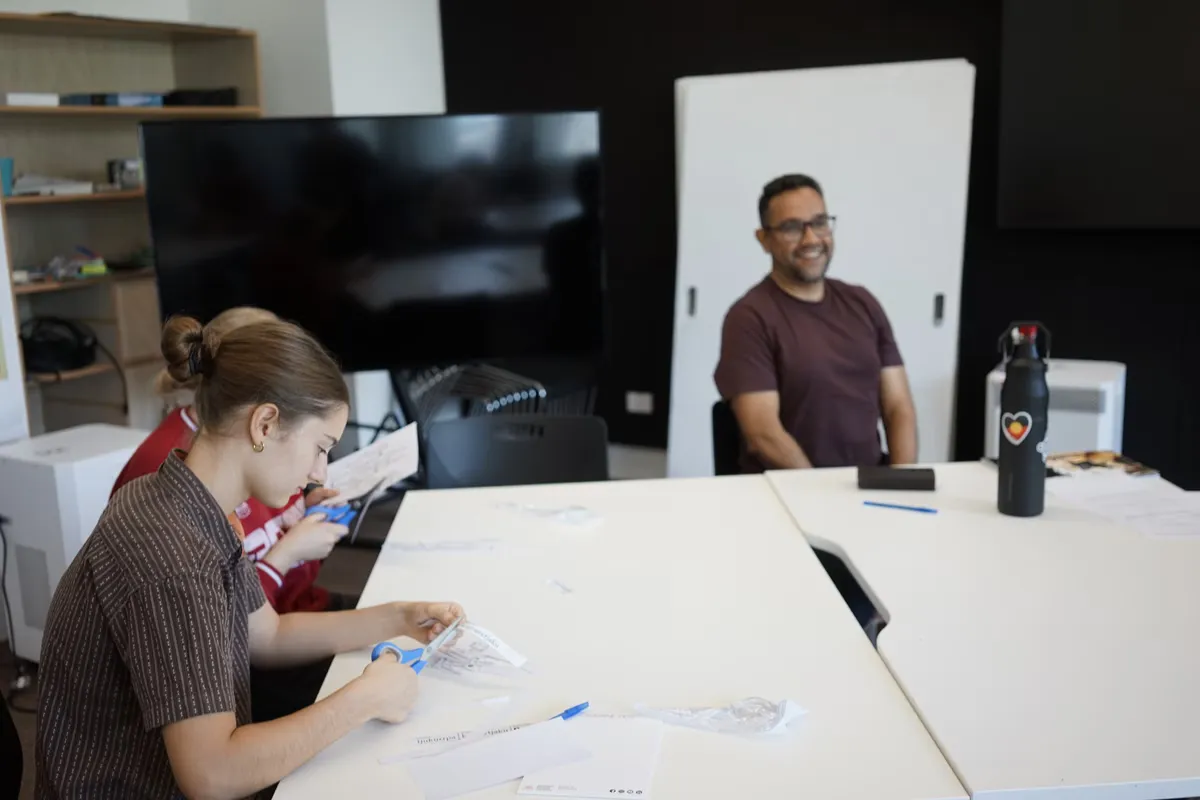
Ngurrparringu is about language, ancestors, country, and forgetting. Handing it to a room of Autumn School students so they could cut it into pieces and rearrange those pieces into new statistical remixes takes a particular kind of generosity. Thanks Matt for being willing to share this moment—as poet, translator, and co-teacher.
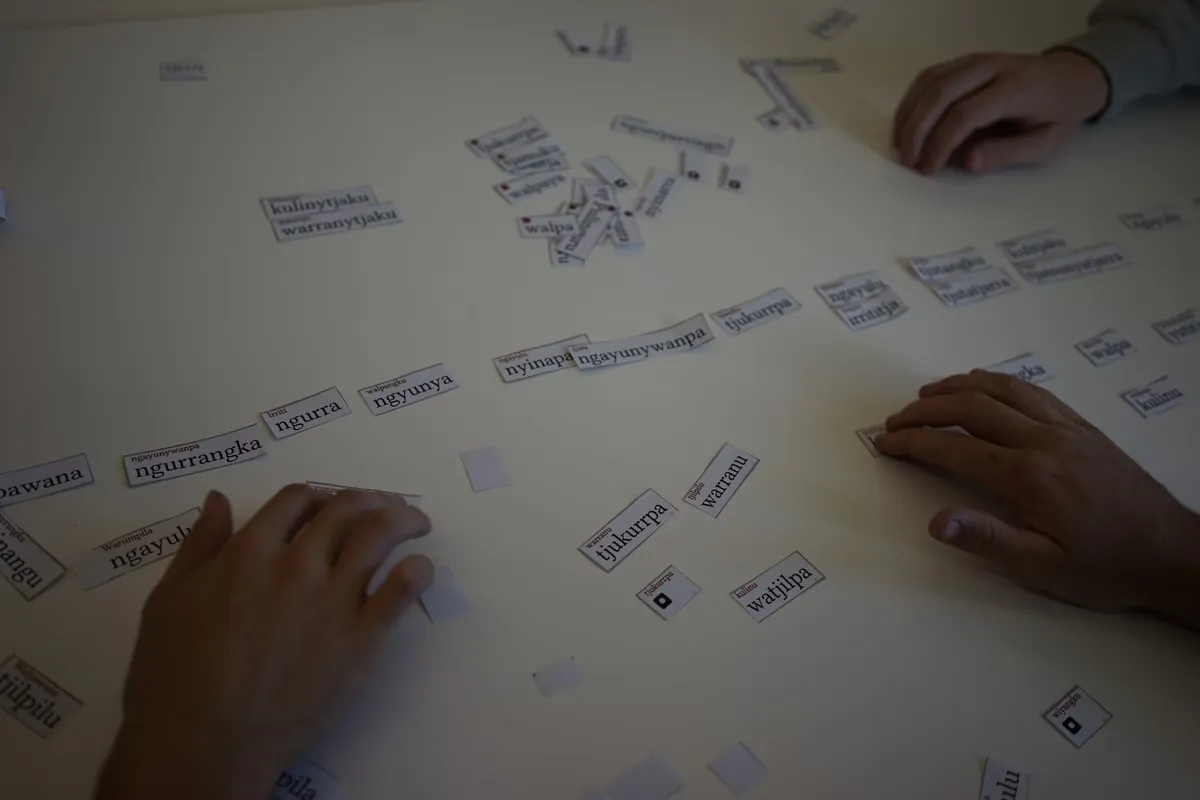
Here’s one of the Luritja generations that came out of a group’s bigram model:
ngurra, Warumpila, Ngayulu Tjilpirringkula ngurrakutu Yankuku. Walpa tjamunyatjarra yutitja kulini. Kunyi Wiyalpi ngayulu nyinarra ngurrparringu. Tjinguru irrititja tjilpi tjuta ngayunywanpa ngurrangka nyinangu. Walpawana tjilpilu warranu tjukurrpa. Wiya Watjilarritjaku. Kala tjinguru ngayulu Walpa kulitjaku, walpaya kulinu watjilpa wiyangku.
Matt translated it for us on-the-fly:
Country… Warumpi, I will become an old man, towards homes going. My grandfather’s Winds heard Clearly, Poor things, I don’t stay—forgotten, Maybe, in the old times, old men like me Stayed on Country, the Wind, the old men Sung Dreamtime, Not Sad anymore, but—ok, maybe I will hear the Wind, Wind is lonely—No.
Every word in the Luritja comes from Matt’s poem; the model has just put them in a different order.
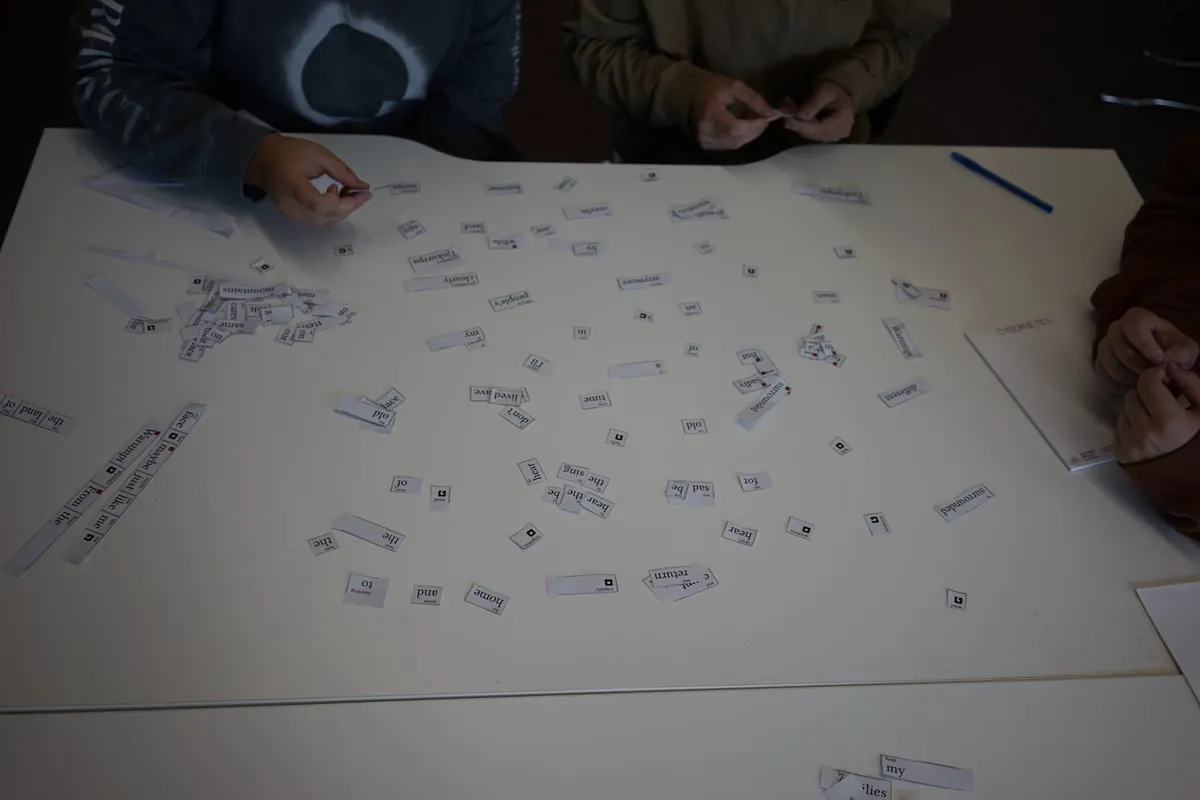
There is nothing inherently English (or any other particular language) about a language model. The training data determines the output language. Train on Luritja, get Luritja out. Train on a Python codebase, get something that looks like Python. What goes in is what comes out.
Another group trained on only the English version of Ngurrparringu and their language model generated this poem:
Clearly anymore. I don’t hear the wind, listening to the old men sat on the wind of my people, Warumpi
Every word Matt’s, but reshuffled. To close out the morning we all worked together on one more new LLM-generated poem, this time tipping The Cat in the Hat into the training mix alongside the English poem:
Good Fun at all if you wish we sat in the mountains, we had something to Sing our Tjukurrpa, Cold
“Good fun” and “all if you wish” are Seuss; “mountains” and “Tjukurrpa” are Matt. The model samples whatever tokens are in the bucket, and if you mix the training data and you mix the output.
The corollary is that if a language isn’t in the training data, it isn’t in the outputs either. No representation in, no representation out. When people say modern LLMs “know” English better than other languages, they mean those LLMs were trained on orders of magnitude more English text than anything else, and the tokenisers, evaluations and benchmarks all reflect that choice. It’s a property of what we fed them.
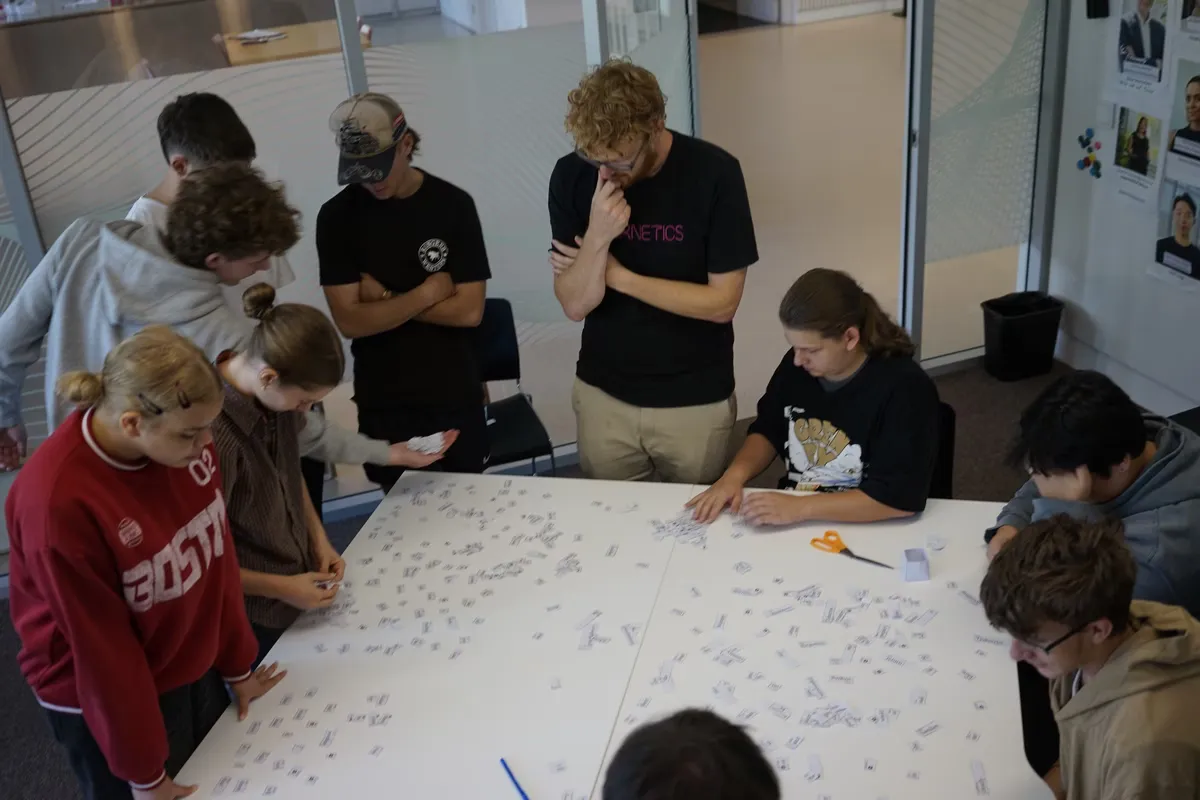
Thanks again to Matt for the time, the poem, and the translations, and to the Tjabal Centre and the Autumn School participants for being up for something new on a Tuesday morning. If you work with a language (or a community, or a knowledge tradition) that’s underrepresented in LLM training data and want to try something like this, do get in touch—we’d love to help.