How AI writes stories at Duffy Primary

Last Tuesday we took LLMs Unplugged into a Year 5 classroom at Duffy Primary School (around 35 students) for a lesson we called How AI Writes Stories. The session came about through the ACT Academy of Future Skills, who’ve been helping us get these materials in front of students and teachers across the territory’s public schools.
Most of our workshops so far have been with teachers, education professionals, or high-school students. Duffy was our first proper run with upper-primary kids, and we genuinely weren’t sure how the hands-on model building would land with a younger group. We needn’t have worried.
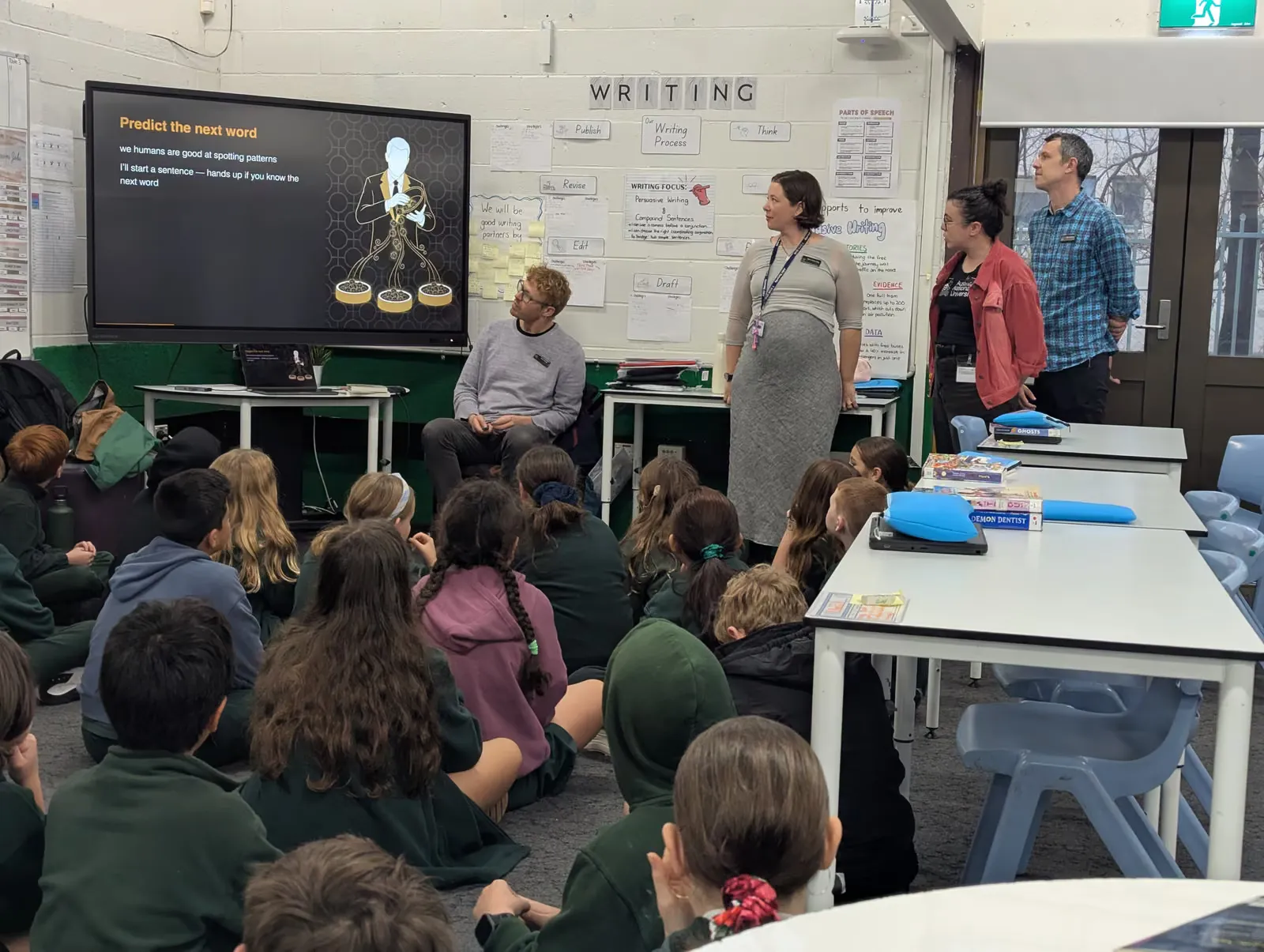
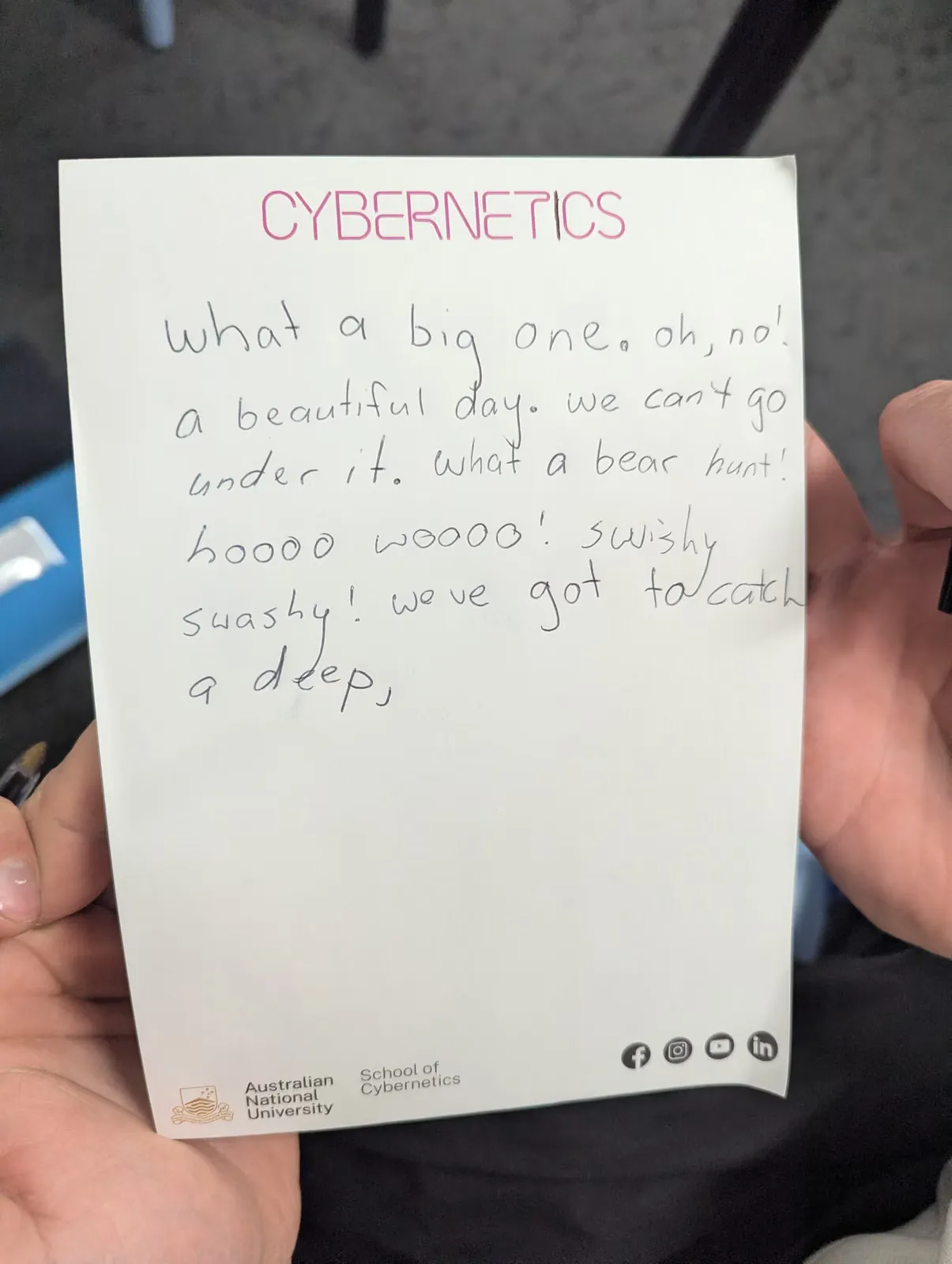
We ran the cutouts version of the activity: rather than tallying tokens on a worksheet, students sort word cards into buckets and then build new sentences by drawing cutouts one at a time. Counting, sorting, and then watching a brand-new sentence assemble itself out of nothing but frequency counts—it’s the same statistical machinery that sits underneath ChatGPT, just slowed down to human speed and made out of paper.
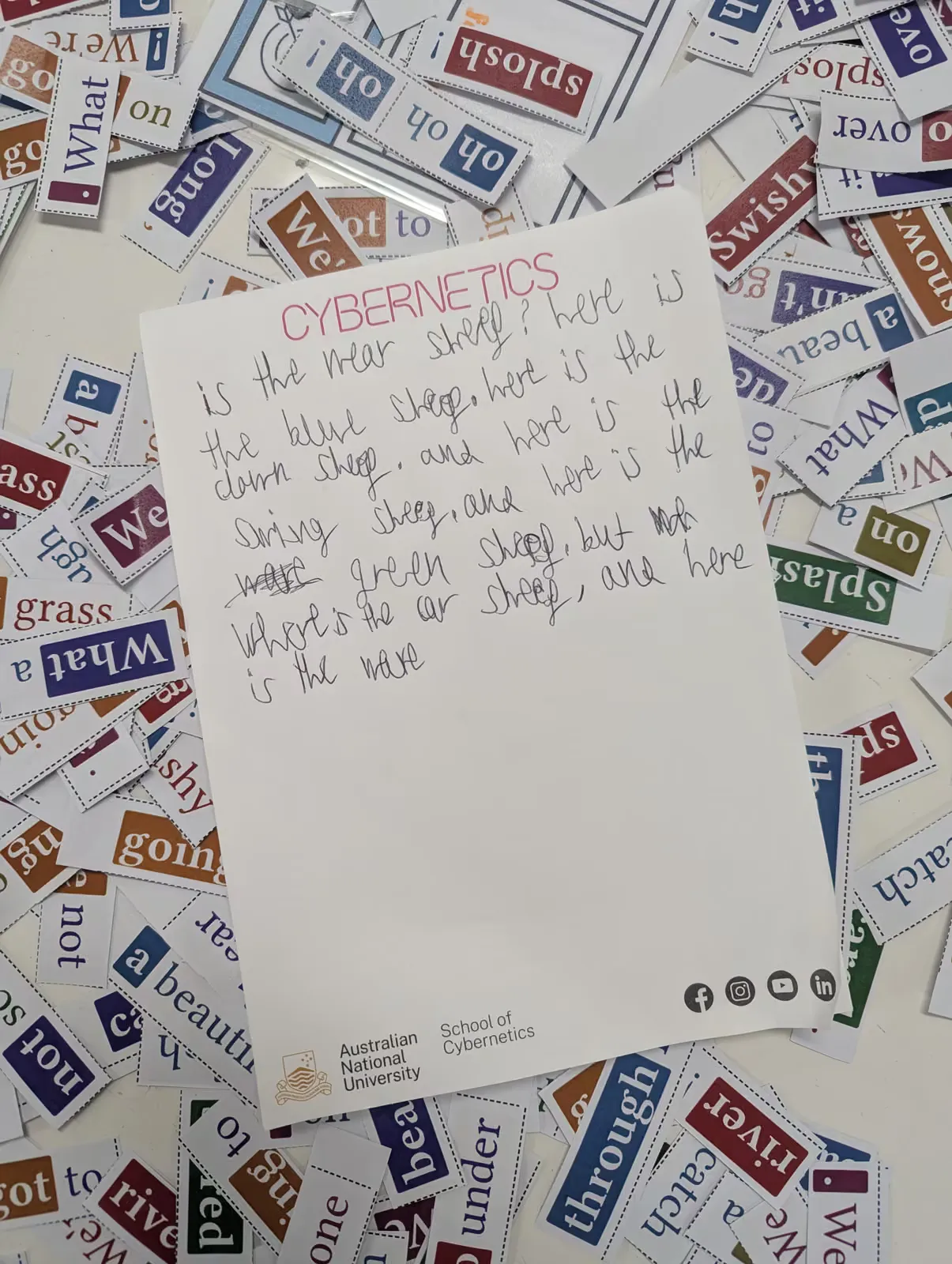
The Year 5s were sharp. They asked exactly the questions you’d hope for: why the model sometimes produces nonsense, where the “creativity” actually comes from, what changes if you feed it a different book—plus a few that properly made us think. There’s something clarifying about explaining a language model to a ten-year-old; an explanation that doesn’t survive contact with a Year 5 classroom probably wasn’t a good explanation to begin with.
Thanks to Pip Hall and the Duffy Primary team for having us, and to the ACT Academy of Future Skills for making the connection. There are already more primary schools lining up—which is exactly the point. If you’d like to run something like this with your students, do get in touch.